America's Legitimacy Problem: Why Trust Matters
Welcome back to the blog! In our latest podcast episode, "The Trust Crisis: Renée Good, ICE, Syria Strikes, Shutdown Deadline, Tariffs, and the Economy," we delved deep into a pervasive and increasingly dangerous issue plaguing the United States: a crisis of legitimacy and trust in our institutions. This blog post will expand on those themes, connecting seemingly disparate events to illustrate how a breakdown in faith in our systems makes every challenge, from a local law enforcement encounter to global foreign policy decisions, exponentially more perilous. If you haven't had a chance to listen to the episode yet, I highly encourage you to check it out here: The Trust Crisis: Renée Good, ICE, Syria Strikes, Shutdown Deadline, Tariffs, and the Economy. The conversation on the podcast was nuanced and, at times, deeply challenging, and this post aims to provide a more detailed exploration of the threads we picked up.
The Renée Good Incident: A Flashpoint for Lost Faith
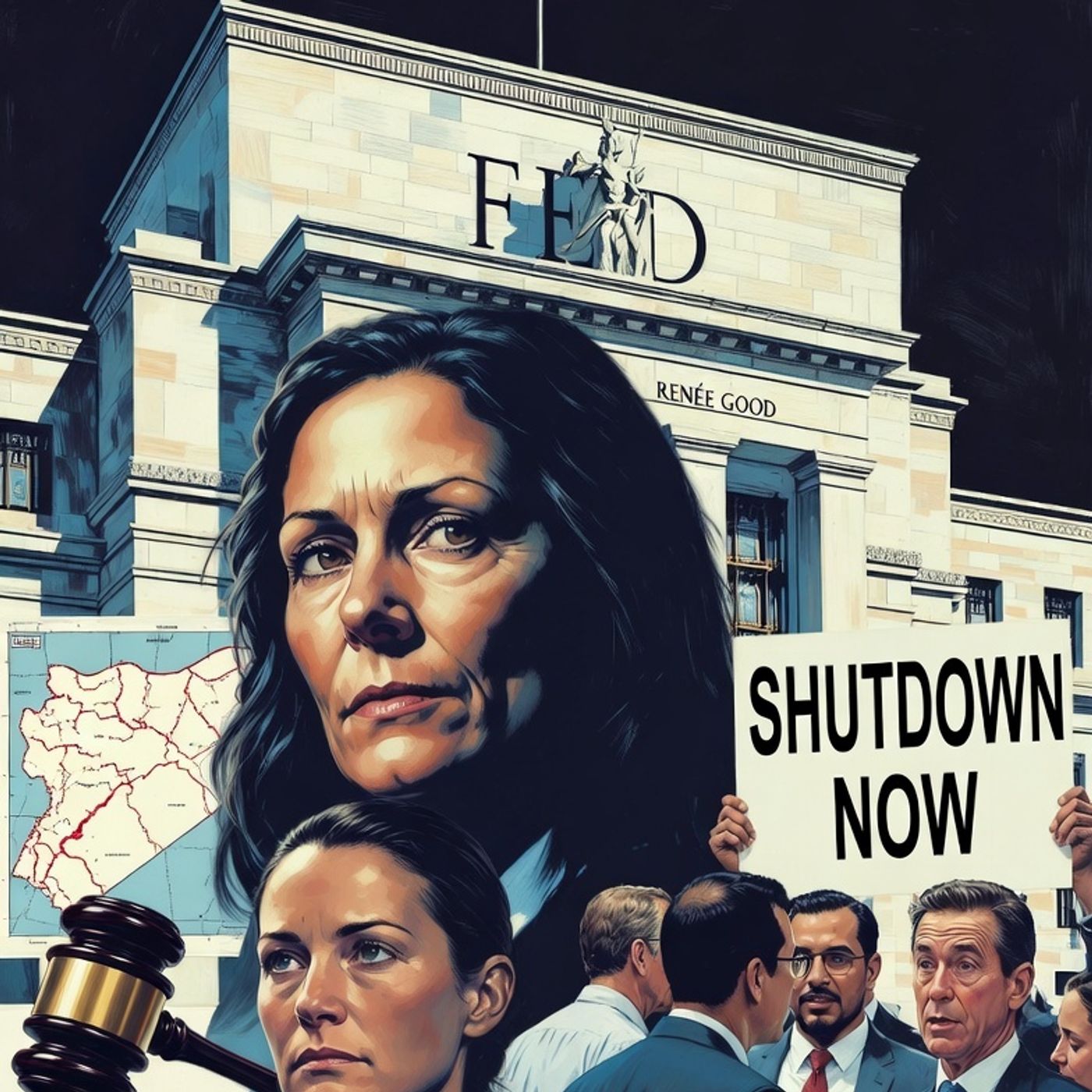
Our podcast episode began with the tragic death of Renée Good, a woman killed in an encounter with ICE agents in Minneapolis. This heartbreaking event, like so many others that capture national attention, became a focal point for a much larger, underlying problem: the erosion of trust. It’s easy to get caught up in the immediate details, the conflicting reports, the emotional outpouring. But what we aimed to do on the podcast, and what we'll continue to explore here, is to look beyond the individual incident and understand what it signifies about the broader societal landscape. When a law enforcement encounter, particularly one involving federal agents, results in death, it doesn't just affect the families involved. It reverberates through communities, especially those that have historically experienced strained relationships with authority. The "narrative temperature" in America, as we discussed, is incredibly high. In this charged environment, where skepticism is rampant and faith in official accounts is low, every incident, especially one involving force and loss of life, can be amplified, politicized, and viewed through a lens of pre-existing distrust. This incident, therefore, wasn't just about one person; it was a stark illustration of how fragile public faith has become, and how quickly a localized tragedy can become a national symbol of deeper institutional failings.
Beyond Minneapolis: Connecting the Dots to Broader Institutional Failures
The temptation is always to treat such events in isolation. We see a shooting, we hear about a policy, we witness a political squabble, and we categorize them as individual problems. However, the core argument of our podcast, and the driving force behind this post, is that these seemingly disconnected events are, in fact, deeply intertwined. They are all symptoms of a shared ailment: a national crisis of trust. When people lose faith in the fundamental fairness, honesty, and competence of their institutions – whether it's law enforcement, government, or the economy – every interaction becomes more fraught. Every decision, from the smallest bureaucratic hurdle to the most significant international policy, is viewed with suspicion. This lack of faith doesn't just make life more stressful; it actively undermines our ability to address complex challenges, fostering division and paralysis. By examining several key flashpoints, we can begin to see the pattern emerge and understand the profound implications of this widespread distrust.
Foreign Policy and National Security: Trust in Decisions (Syria Strikes)
Consider the realm of foreign policy. When the United States makes decisions about military intervention, such as the strikes in Syria, the public's reaction is heavily influenced by their existing trust in the government's motives and competence. If the public broadly trusts that the government's intelligence is sound, its objectives are clearly defined and honorable, and its execution will be precise and effective, then such actions, even if controversial, might be met with a degree of acceptance or at least reasoned debate. However, in an environment of low trust, every foreign policy decision, especially those involving military action, becomes suspect. Questions arise about hidden agendas, the accuracy of intelligence used to justify the action, and the potential for unintended consequences. The strikes in Syria, for example, while presented as a response to specific events, were also met with skepticism by some who questioned the long-term strategy, the effectiveness of such strikes, and whether they were truly in America's best interest. This skepticism is not always about disagreeing with a particular policy; it’s often rooted in a fundamental distrust of the institution making the decision. If people don't believe the government is being truthful or acting with integrity, then even well-intentioned actions can be interpreted through a negative, conspiratorial lens, further eroding the basis for national unity and support for critical national security endeavors.
Governing by Crisis: The Peril of Shutdown Deadlines
The recurring spectacle of government shutdowns provides another stark example of this trust deficit. When Congress and the executive branch repeatedly find themselves on the brink of a shutdown, it signals a failure to govern effectively. These crises, often driven by partisan gridlock and an inability to reach compromise, erode public confidence in the competence of our elected officials. The constant threat of essential government services being interrupted, of federal employees being furloughed, and of national parks closing, creates a sense of instability and dysfunction. For citizens who rely on these services or who simply expect their government to function smoothly, this perpetual state of crisis is a powerful indicator that the system is broken. It fosters cynicism and reinforces the belief that politicians are more interested in political theater and partisan victories than in serving the public good. When governing is consistently done through the manufactured urgency of crisis deadlines, it suggests a lack of foresight, responsibility, and a willingness to engage in genuine dialogue. This, in turn, makes it harder for the public to trust that the government can handle even routine matters, let alone the nation's most pressing challenges.
Economic Pressures: Tariffs, Emergencies, and Public Confidence
The economic sphere is another critical area where trust is paramount. The implementation of tariffs, for instance, has direct and often palpable effects on the lives of everyday Americans. When tariffs are imposed, they can lead to increased prices for imported goods, impacting consumers' purchasing power. Furthermore, the justification for these tariffs, whether framed as national security or economic protection, is often subject to intense debate and scrutiny. If the public does not trust the economic reasoning behind these policies, or if they perceive them as serving the interests of a select few rather than the broader population, it can lead to significant dissatisfaction and a decline in confidence in economic leadership. This is further compounded when economic measures are justified through the invocation of emergency powers. While such powers may be necessary in certain extreme circumstances, their repeated or seemingly arbitrary use can create anxiety and distrust. The public needs to feel confident that economic policies are being made with their best interests at heart and that the institutions responsible for them are acting transparently and competently. When this confidence erodes, economic anxieties can quickly morph into a broader distrust of the entire system, creating a ripple effect across society.
The Squeeze on Everyday Americans: Price Sensitivity and Economic Anxiety
The cumulative effect of these economic pressures is a heightened sense of anxiety and price sensitivity among everyday Americans. In our current economic climate, many individuals and families are already feeling the strain of rising costs for essentials like food, housing, and energy. When economic policies, such as tariffs or trade disputes, are perceived to exacerbate these pressures, it directly impacts people's livelihoods. This is not an abstract economic theory; it's about families struggling to make ends meet, having to make difficult choices between necessities, and feeling the pinch of inflation in their daily lives. This direct experience of economic hardship makes citizens more attuned to the actions and pronouncements of economic institutions and leaders. If they believe these institutions are not acting in their best interest, or if they perceive a disconnect between official rhetoric and their lived reality, their trust will inevitably falter. This economic anxiety is a potent driver of broader societal distrust, as it fuels the feeling that the system is rigged against ordinary people.
The Core Problem: Losing Faith in Our Systems
What unites all these disparate examples – the Renée Good incident, foreign policy decisions, government shutdowns, and economic pressures – is a fundamental loss of faith in our systems. We are witnessing a pervasive distrust in the institutions that are supposed to uphold order, ensure fairness, and promote the common good. This isn't just about disagreeing with specific policies or outcomes. It's about a deeper skepticism that the institutions themselves are capable of acting with integrity, competence, and honesty. When people believe that law enforcement operates without accountability, that politicians are driven by self-interest, that economic policies benefit the wealthy, or that foreign policy decisions are based on deception, the foundation of a functioning society begins to crumble. Every challenge, from a minor inconvenience to a major crisis, is viewed through this prism of distrust, making constructive dialogue, compromise, and collective action incredibly difficult. This erosion of legitimacy is perhaps the most dangerous threat facing America today.
Principles for Rebuilding Trust: Responsibility, Transparency, and Clarity
The good news, if there is any, is that trust, while difficult to earn, is not impossible to rebuild. It requires a conscious and sustained commitment to certain fundamental principles. First and foremost is responsibility. Institutions and individuals within them must take ownership of their actions, acknowledge mistakes, and be held accountable. This means moving beyond deflection and excuses and embracing a culture of accountability at all levels. Secondly, transparency is crucial. The inner workings of government and other institutions should be as open as possible, allowing citizens to understand how decisions are made and why. This involves clear communication, access to information, and a willingness to be scrutinized. Finally, clarity in communication and purpose is essential. Ambiguous messaging, conflicting statements, and shifting objectives only breed confusion and suspicion. Institutions need to articulate their goals clearly, explain their reasoning, and adhere to consistent principles. By embracing these principles – responsibility, transparency, and clarity – we can begin the long but essential process of repairing the fractured trust that currently undermines our nation.
Conclusion: Why Rebuilding Trust is Essential for a Safer Future
In conclusion, the issues we explored in our podcast episode, "The Trust Crisis: Renée Good, ICE, Syria Strikes, Shutdown Deadline, Tariffs, and the Economy," and elaborated on in this blog post, paint a concerning but vital picture of America's current state. The Renée Good incident, the complexities of foreign policy decisions like the Syria strikes, the recurring dysfunction of government shutdowns, and the palpable economic anxieties of everyday Americans are not isolated problems. They are interconnected symptoms of a profound crisis of trust and legitimacy. When faith in our institutions erodes, every challenge becomes magnified. Law enforcement encounters become flashpoints for deep-seated resentments, policy decisions are met with suspicion rather than reasoned debate, and economic hardship fuels broader societal instability. Rebuilding trust is not merely an abstract ideal; it is a practical necessity for a safer, more functional, and more resilient nation. By recommitting to principles of responsibility, transparency, and clarity, we can begin the arduous but crucial work of restoring faith in the systems that are meant to serve us. Thank you for joining me on this exploration, and I encourage you to continue the conversation, both by listening to the episode and engaging with these critical issues.

The Economy's Squeeze: Price Sensitivity and Trust in Economic Stability