Syria Strikes and ISIS: Navigating Foreign Policy in an Era of Skepticism
Welcome back to the blog, where we dive deeper into the complex issues we explore on the podcast. In our latest episode, The Trust Crisis: Renée Good, ICE, Syria Strikes, Shutdown Deadline, Tariffs, and the Economy, we tackled a range of critical topics that all boil down to one fundamental problem: a pervasive erosion of trust in our institutions. Today, I want to expand on one of the most consequential areas we discussed: foreign policy, specifically through the lens of Syria strikes and the ongoing threat of ISIS. This is a prime example of how skepticism towards government pronouncements can cripple effective diplomacy and action on the international stage. You can listen to the full episode here.
The Erosion of Trust in Foreign Policy
The very fabric of governance relies on a degree of trust between the governed and those who govern. When this trust erodes, every action taken by the government, particularly in the realm of foreign policy, becomes subject to intense scrutiny and suspicion. This isn't just about partisan politics; it's about a fundamental question of belief. Do citizens believe what their leaders tell them about why certain actions are necessary, what the risks are, and what the desired outcomes entail? In the context of military interventions, complex geopolitical alliances, and the nebulous nature of threats like terrorism, this trust is absolutely paramount. Without it, even the most well-intentioned and strategically sound foreign policy can falter, facing internal dissent, international condemnation, and ultimately, failure to achieve its objectives.
Our society has become increasingly skeptical of official narratives. Decades of what some perceive as misleading information, broken promises, and actions that seem to contradict stated intentions have created a fertile ground for doubt. This skepticism is amplified by the 24/7 news cycle and the echo chambers of social media, where alternative interpretations and outright disinformation can spread like wildfire. In this environment, a government that struggles to communicate clearly and consistently will find itself perpetually on the defensive, its pronouncements met with eye-rolls rather than informed consent.
Syria Strikes: A Case Study in Skepticism
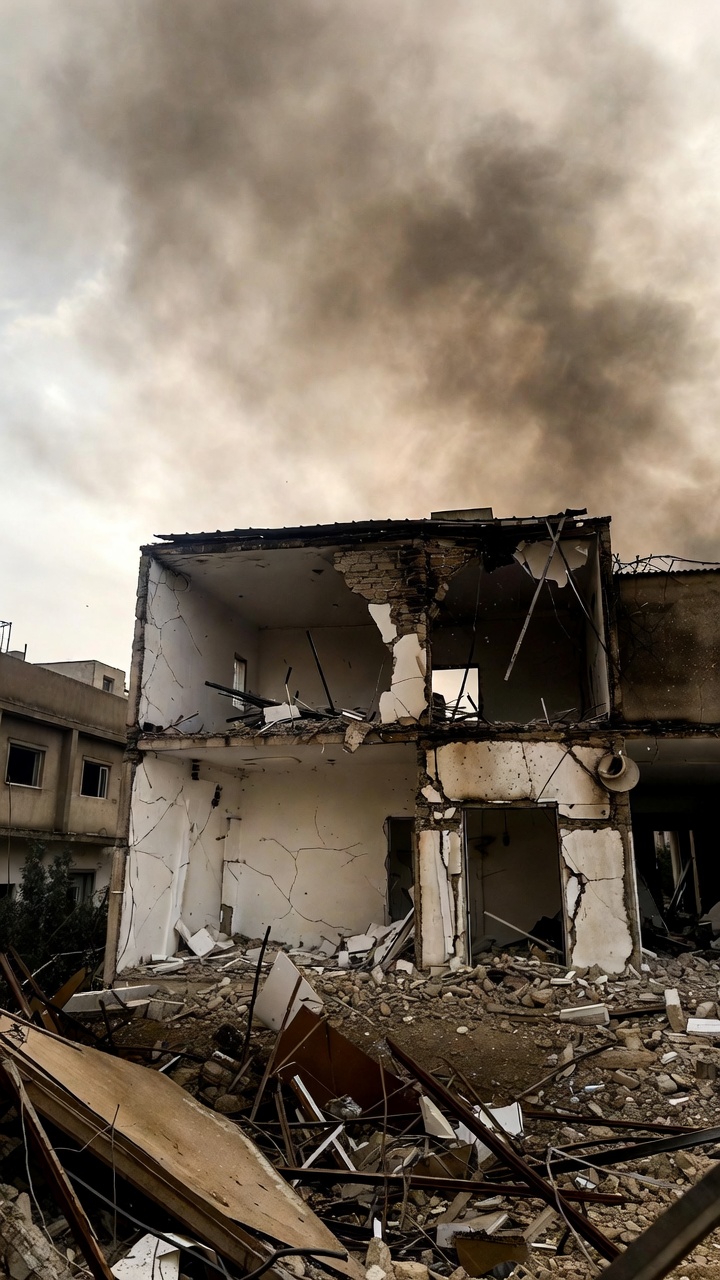
The decisions surrounding military action in Syria, particularly in response to chemical weapons attacks attributed to the Assad regime, serve as a potent illustration of this trust deficit. When the United States, often in conjunction with allies, has launched strikes in Syria, the public reaction has rarely been one of unequivocal support. Instead, it's often a chorus of questions: "What is our objective here? Are we sure who is responsible? What are the long-term consequences? Are we getting dragged into another protracted conflict?"
These aren't trivial questions. They stem from a history where justifications for intervention have, at times, been later proven to be incomplete or even inaccurate. The difficulty in definitively attributing responsibility for certain events in a chaotic warzone like Syria only compounds the problem. When the evidence presented to the public is perceived as insufficient, or when the stated goals of a strike are ambiguous or seem to shift, the foundation of trust begins to crumble. For instance, if the initial justification for strikes is to prevent further chemical weapons use, but the strikes are perceived as having minimal impact on the regime's capabilities, or if the narrative then pivots to broader regional stability, citizens are left wondering about the true intent and efficacy of the action.
This skepticism isn't necessarily born out of malice; it's a rational response to a perceived lack of transparency and predictability. The complexity of the Syrian conflict, with its myriad of actors, proxy wars, and humanitarian crises, makes it incredibly difficult to present a simple, easily digestible narrative. However, in an era of low trust, simplicity and clarity, even if they oversimplify, are often more effective in garnering public buy-in than complex, nuanced explanations that can be easily deconstructed and challenged.
The ISIS Threat: Navigating Ambiguity and Doubt
The threat posed by ISIS, and by extension, the global fight against terrorism, is another arena where public trust is constantly tested. While the existence of a terrorist organization dedicated to violence and seeking to destabilize regions is generally accepted, the strategies and pronouncements related to combating it are often met with skepticism. This is particularly true when these strategies involve long-term military commitments, the arming of proxy forces, or the allocation of significant resources.
ISIS, for all its brutality and its territorial ambitions, operates in a way that makes clear-cut victories and definitive end-points elusive. The group has proven resilient, capable of morphing its tactics and its organizational structure. This inherent ambiguity creates challenges for policymakers. How does one articulate a clear strategy and measurable objectives when the enemy is adaptable and the battlefield is fluid? For the public, this ambiguity can translate into a perception that the government is either not entirely sure of its plan or is withholding critical information.
Furthermore, the very nature of intelligence gathering and counter-terrorism operations often necessitates a degree of secrecy. While understandable, this secrecy can be a double-edged sword. When the public is not privy to the intelligence that underpins a particular policy decision – whether it's a drone strike, an intelligence-sharing agreement, or a diplomatic maneuver – they are more likely to question the necessity and wisdom of that decision. The "trust us, we know best" approach, especially in foreign policy, is increasingly untenable when the public feels unheard or uninformed.
The Perils of Low Trust: Undermining International Credibility
The consequences of low public trust extend beyond domestic skepticism. They directly impact a nation's credibility on the international stage. When a government's pronouncements are met with doubt at home, it weakens its standing with allies and emboldens adversaries abroad.
Imagine a scenario where the US government is seeking to build a coalition to counter a specific threat. If that government has a history of making opaque pronouncements or engaging in actions that later face domestic backlash due to a lack of transparency, potential allies will be hesitant. They will question the US's commitment, its consistency, and its ability to maintain a unified front. This is particularly damaging in volatile regions where consistent, reliable partnerships are essential for stability.
Conversely, adversaries can exploit this internal division and skepticism. They can point to domestic dissent and questioning as evidence of a nation's weakness or indecision, further complicating diplomatic efforts and potentially escalating tensions. The narrative that "America is divided and unsure of its own policies" can be a powerful tool for those seeking to undermine American influence and interests.
In the context of Syria and ISIS, a lack of consistent, clear, and trusted communication can lead to a fragmented international response. Allies might pursue their own agendas, or they may simply disengage, believing that the US lacks the political will or the domestic consensus to see a policy through. This fragmentation can create opportunities for extremist groups to regroup and for regional conflicts to fester.
The Importance of Clear Communication and Consistent Policy
Given these challenges, the path forward for effective foreign policy in an era of skepticism hinges on two critical elements: clear communication and consistent policy.
Clear Communication: This means more than just issuing statements. It requires a proactive and sustained effort to inform the public about the rationale behind foreign policy decisions. Policymakers need to be adept at explaining complex geopolitical situations in a way that is accessible without oversimplifying to the point of distortion. This involves:
- Articulating clear objectives: What are we trying to achieve? What does success look like? These goals should be specific, measurable, achievable, relevant, and time-bound (SMART) whenever possible.
- Explaining the 'why': Why is this action necessary? What are the risks of inaction? This requires honest assessments of threats and potential consequences.
- Being transparent about uncertainties: Acknowledging what is unknown or uncertain can build more trust than pretending to have all the answers. It demonstrates intellectual honesty.
- Using consistent messaging: Contradictory statements from different government officials or shifts in the narrative can fuel distrust. A unified message, even when discussing evolving situations, is crucial.
Consistent Policy: Inconsistent policy is a fast track to losing international credibility. This means developing strategies that are not subject to the whims of political expediency or short-term political gains. It requires:
- Long-term vision: Foreign policy should be guided by enduring national interests and strategic goals, rather than reactive responses to immediate crises.
- Predictability: Allies and adversaries alike should be able to anticipate a nation's general approach to certain issues. This doesn't mean inflexibility, but rather a discernible framework for decision-making.
- Avoiding rhetorical overreach: Promising outcomes that cannot be delivered, or making threats that cannot be followed through on, erodes trust and weakens diplomatic leverage.
- Building consensus: Where possible, seeking bipartisan support for key foreign policy initiatives can create a buffer against political shifts and demonstrate a united national resolve.
In the context of Syria and ISIS, this would mean developing a coherent strategy that addresses both the immediate threat of terrorism and the underlying conditions that foster extremism, while clearly communicating these aims to the public and our allies. It means being upfront about the challenges and the long-term commitment required, rather than presenting a quick-fix solution.
Rebuilding Trust: Towards a More Transparent Foreign Policy
Rebuilding trust is not a swift process. It requires a sustained commitment to transparency, honesty, and demonstrable competence. For foreign policy, this means embracing a culture of open communication, even when the information is sensitive or complex. It means being willing to acknowledge mistakes, learn from them, and adjust strategies accordingly. It also means actively engaging with diverse voices and perspectives, both domestically and internationally, to ensure that policies are informed by a broader understanding of the world.
The public needs to feel that their government is acting in their best interests, and that it is doing so with integrity. This requires a shift away from relying solely on official pronouncements and towards a more collaborative and inclusive approach to foreign policy decision-making, where possible. When the public feels they are partners in understanding and supporting foreign policy, rather than passive recipients of directives, the foundation of trust can begin to be laid.
Conclusion: Foreign Policy in an Era of Skepticism
The challenges we face in foreign policy today, particularly concerning issues like Syria strikes and the ongoing threat of ISIS, are deeply intertwined with the broader crisis of trust that we explored in our latest podcast episode, The Trust Crisis: Renée Good, ICE, Syria Strikes, Shutdown Deadline, Tariffs, and the Economy. As we’ve discussed in this post, when skepticism towards government pronouncements is high, even well-intentioned foreign policy initiatives can falter. The complexity of conflicts like Syria, coupled with the elusive nature of threats like ISIS, demands clear, consistent, and transparent communication from our leaders. Without it, our international credibility is undermined, our allies are hesitant, and our adversaries are emboldened.
The path forward requires a fundamental commitment to rebuilding that trust. This means articulating clear objectives, explaining the rationale behind our actions, acknowledging uncertainties, and maintaining consistent policy. It’s a long and arduous road, but one that is essential for navigating the complex geopolitical landscape and ensuring that our nation's foreign policy is both effective and supported by the people it is meant to serve. Thank you for joining me as we delve deeper into these critical topics. Be sure to tune into the podcast for more insights.

The Economy's Squeeze: Price Sensitivity and Trust in Economic Stability