
The Dark Side of Set-Asides: How 'Small Business' Status Can Be Hijacked
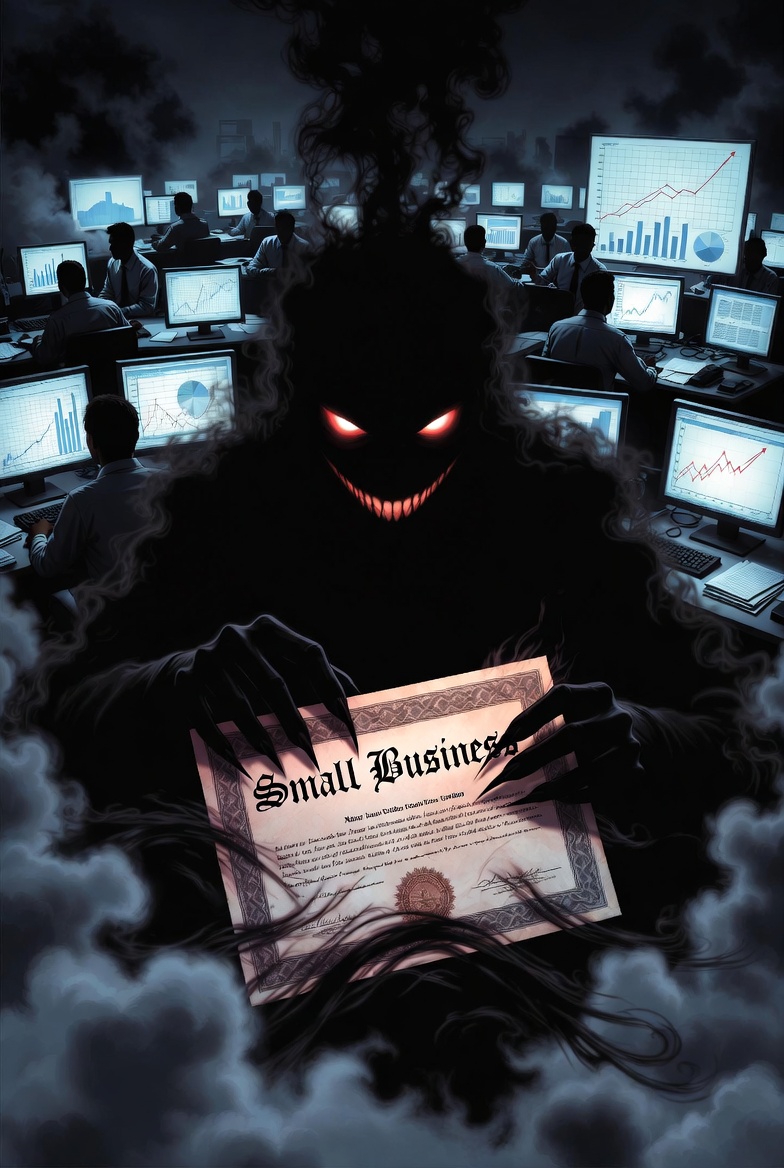
Welcome back to the blog, where we dive deeper into the topics we explore on the podcast. In our latest episode, Subsidies, Strings, and Small Business: Inside the SBA Maze, we tackled the often-complex world of government programs designed to support small businesses. While these programs hold immense promise, they can also be fertile ground for fraud and exploitation. Today, we're going to pull back the curtain even further and expose how certain government contracting set-aside programs, specifically those aimed at small businesses, can be manipulated through insidious schemes, effectively stealing opportunities from truly deserving companies. This isn't just about numbers on a ledger; it's about trust, fairness, and the very backbone of our economy – the small business owner trying to make an honest living.
Understanding Government Contracting Set-Aside Programs: The Intention Behind the Rules
Government contracting is a massive engine of the American economy, with federal agencies spending billions of dollars annually on goods and services. To ensure that smaller businesses aren't constantly outmaneuvered by corporate giants, the government has implemented a variety of set-aside programs. The core intention behind these programs is noble: to create a more level playing field, foster competition, and encourage the growth of small businesses, which are the primary drivers of job creation and innovation.
These set-aside programs essentially carve out a portion of government contracts exclusively for small businesses, or for specific categories of small businesses, such as those owned by women, minorities, veterans, or those located in historically underutilized business zones. The Small Business Administration (SBA) plays a crucial role in administering and overseeing many of these programs, setting criteria for what constitutes a "small business" and certifying eligible entities.
The idea is simple: instead of competing against companies with vast resources and established relationships, a small business can compete for a contract specifically designated for them. This provides a vital opportunity for these smaller entities to gain experience, build a track record, and grow their operations. However, like any system designed with good intentions, it can be vulnerable to those who seek to game the rules for personal gain. The very mechanisms designed to uplift small businesses can, unfortunately, be twisted into tools for deception.
The 8(a) Program: A Closer Look at Its Goals and Potential for Misuse
One of the most prominent and powerful small business set-aside programs is the SBA's 8(a) Business Development program. This program is specifically designed to help socially and economically disadvantaged individuals gain access to the federal marketplace. It provides a wide range of assistance, including help with business planning, access to capital, and, critically, preferential access to government contracts.
Eligible businesses can receive sole-source contracts (meaning they don't have to compete with other companies) or participate in competitive set-asides. The 8(a) program aims to nurture these businesses over a nine-year period, equipping them with the experience and financial stability needed to eventually compete in the open market. The ultimate goal is to create a pipeline of successful, self-sufficient small businesses that contribute to the broader economy.
However, the very exclusivity and preferential treatment offered by the 8(a) program make it a prime target for abuse. The allure of guaranteed government contracts, especially lucrative ones, can tempt individuals and companies to circumvent the program's eligibility requirements. This is where the dark side of set-asides begins to surface, as well-intentioned regulations are twisted into vehicles for fraud.
The Mechanics of Fraud: Pass-Through Schemes and Front Companies Explained
The most common and damaging forms of fraud within the set-aside program landscape involve "pass-through schemes" and "front companies." These schemes are designed to create the illusion that a contract is being performed by an eligible small business, when in reality, a larger, ineligible entity is the true beneficiary.
A pass-through scheme occurs when an eligible small business (often a certified 8(a) firm) acts as a middleman. The small business receives a government contract that it is eligible for, but then subcontract a significant portion, or even all, of the work to a larger, non-disadvantaged company. The small business essentially "passes through" the contract, taking a small percentage as a fee while the larger company does the actual work. While subcontracting is a legitimate business practice, in a pass-through scheme, the small business does not perform a commercially meaningful portion of the work itself. The intent here is to exploit the small business's set-aside status for the benefit of the larger, ineligible company.
A front company is a slightly different, but equally insidious, tactic. In this scenario, an ineligible entity (a large corporation or an individual who doesn't qualify) essentially sets up or controls an entity that *does* qualify as a small business for the purpose of winning government contracts. The "front" company might be legally owned and operated by individuals who meet the eligibility criteria (e.g., belonging to a disadvantaged group), but the true control, management, and economic benefit flow back to the ineligible party. This can involve the ineligible party providing all the financing, dictating business operations, or retaining most of the profits, while the nominal owners are merely figureheads.
These schemes are often sophisticated, involving complex ownership structures, shell corporations, and meticulously crafted documentation to deceive government auditors and contracting officers. The perpetrators exploit loopholes, misinterpretations, and the sheer volume of contracts being processed to hide their illicit activities. The result is that government funds, which were intended to support genuine small businesses, are diverted to larger entities that do not meet the program's criteria.
Who Gets Hurt? The Impact on Genuine Small Businesses and Honest Entrepreneurs
The victims of these fraudulent schemes are the very businesses the set-aside programs are designed to help. Genuine small businesses, run by dedicated entrepreneurs who have worked tirelessly to build their companies and meet eligibility requirements, are the primary casualties. They invest time, resources, and their personal capital into their ventures, only to find themselves competing against phantoms or being systematically shut out of opportunities.
Imagine a small construction company, owned by a veteran, that has diligently built its reputation over years of hard work and has finally qualified for an 8(a) set-aside contract. They have the skilled labor, the equipment, and the business acumen. However, they lose out to a large, established construction firm that has used a pass-through scheme, or a front company, to access the same contract. This not only denies the veteran-owned business a crucial opportunity for growth but also undermines the integrity of the program itself. The veteran might wonder if their hard work and honest dealings are enough, or if they need to resort to similar, unethical tactics to succeed.
Beyond the direct loss of contracts, these fraudulent activities erode trust. Honest entrepreneurs begin to question the fairness of the system. If they see opportunities being awarded to companies that appear to be gaming the rules, they may become disillusioned and less inclined to participate in government contracting. This can lead to a vicious cycle: reduced participation by honest businesses, which in turn makes it easier for fraudulent actors to operate undetected.
Furthermore, these schemes can lead to inflated contract prices. When larger companies are performing the work at a higher overhead cost than a true small business, the government (and ultimately, the taxpayer) may end up paying more. This inefficiency diverts taxpayer dollars away from where they can be most effectively used and can stifle genuine competition by creating an unfair advantage for those who are not playing by the rules.
Beyond 8(a): How Other SBA Programs Can Be Exploited (PPP, EIDL, 7(a), 504)
While our focus today is on contracting set-asides, it's crucial to recognize that the potential for fraud extends to other SBA programs, as we discussed in our related episode. The Paycheck Protection Program (PPP) and Economic Injury Disaster Loans (EIDL), born out of emergency situations like the COVID-19 pandemic, were designed for rapid disbursement, which unfortunately created vast openings for fraudsters. The sheer speed and volume of applications meant that rigorous scrutiny was sometimes bypassed, allowing ineligible entities to receive substantial funds intended for struggling small businesses.
Similarly, the SBA's flagship loan programs, the 7(a) and 504 loans, while providing vital capital for legitimate business expansion, are not immune. Guarantees offered by the SBA can make lenders more willing to approve loans, but this increased availability can also attract those looking to exploit the system. Weakened underwriting standards or a lack of thorough due diligence by lenders can create opportunities for fraudulent applications or misrepresentations of a business's financial health and prospects.
The common thread across all these programs is the fundamental principle of supporting genuine small businesses. When that principle is subverted by fraudulent actors, the entire ecosystem of support is compromised. The very programs designed to be a bridge for real entrepreneurs become a pipeline for illicit gains, leaving honest business owners on the other side of a widening chasm of lost opportunity.
The Erosion of Trust: Why Systemic Fraud Matters
The cumulative effect of these fraudulent activities, across various government programs, is a significant erosion of trust. When small business owners, lenders, and the general public see that the system can be manipulated, faith in the government's ability to effectively support its stated objectives diminishes. This distrust has far-reaching consequences:
- Reduced Participation: Honest businesses may become hesitant to apply for programs they believe are rigged.
- Diminished Innovation: If truly innovative small businesses are unable to secure funding or contracts due to fraud, their potential to contribute to economic growth is stifled.
- Public Cynicism: Taxpayers may become disillusioned with government spending if they perceive funds are being wasted or stolen.
- Increased Oversight Costs: To combat fraud, agencies must invest more resources in audits, investigations, and compliance, which can detract from their primary missions.
The narrative that "Main Street doesn't get the same benefit of the doubt that Wall Street gets" from our related podcast episode rings particularly true here. When the public perceives that large entities or sophisticated fraudsters can exploit loopholes while legitimate small businesses struggle, it fuels a sense of injustice. Systemic fraud doesn't just steal money; it steals momentum, crushes spirit, and undermines the very fabric of economic opportunity.
The Path Forward: Reforms That Can Bolster Integrity and Fairness
Addressing the dark side of set-asides requires a multi-pronged approach focused on strengthening oversight, increasing transparency, and ensuring accountability. Several reforms can help bolster the integrity and fairness of these crucial programs:
- Enhanced Verification and Due Diligence: Implementing more robust "know your customer" principles for all program participants, including stringent ownership and control verification.
- Increased Transparency: Making data on contract awards, subcontracting arrangements, and ownership structures more accessible to the public and oversight bodies.
- Real Ownership/Control Enforcement: Moving beyond superficial ownership structures to ensure that eligible individuals truly control the day-to-day operations and financial benefits of the business.
- Lender Accountability: Holding lenders accountable for the thoroughness of their underwriting and due diligence processes for SBA-backed loans.
- Contract Performance Audits: Regularly auditing the actual performance of small business set-aside contracts to ensure the eligible business is performing a commercially meaningful portion of the work.
- Real Consequences for Cheaters: Implementing severe penalties, including hefty fines and debarment from future government contracting, for individuals and companies found to have engaged in fraud.
- Technological Solutions: Leveraging advanced data analytics and AI to identify suspicious patterns and anomalies in contract awards and loan applications.
These reforms are not about making it harder for legitimate small businesses to access these programs. Instead, they are about ensuring that the programs function as intended, providing a genuine ladder for honest builders and kicking the grifters off. It's about reclaiming the promise of government support for those who truly need it and are working to build our communities.
Conclusion: Reclaiming Opportunity for Main Street Businesses
The government contracting set-aside programs, particularly the 8(a) program, were established with the laudable goal of empowering small, disadvantaged businesses. They represent a critical pathway for entrepreneurs to access lucrative government contracts, build capacity, and contribute to economic growth. However, as we've explored in this post, and as we delved into on our latest podcast episode, Subsidies, Strings, and Small Business: Inside the SBA Maze, these programs are vulnerable to sophisticated fraud schemes like pass-throughs and front companies. These tactics divert opportunities from honest businesses and erode trust in the system.
The impact of this fraud is profound. It doesn't just steal money; it steals dreams, stifles innovation, and creates an uneven playing field that disadvantages the very individuals and companies meant to be uplifted. It's a betrayal of the promise of Main Street deserving the same seriousness and fair chance as Wall Street. By understanding the mechanics of these fraudulent schemes and advocating for robust reforms that emphasize true ownership, performance, and accountability, we can work towards a more equitable and effective system. Our goal must be to ensure that these vital programs serve their intended purpose: to be a genuine bridge for real entrepreneurs, creating jobs and fostering prosperity for all.

The Minneapolis Story: Navigating Competing Claims and Seeking Truth