The Ripple Effect: How the Renée Good-ICE Shooting Exposes a Deeper Trust Crisis

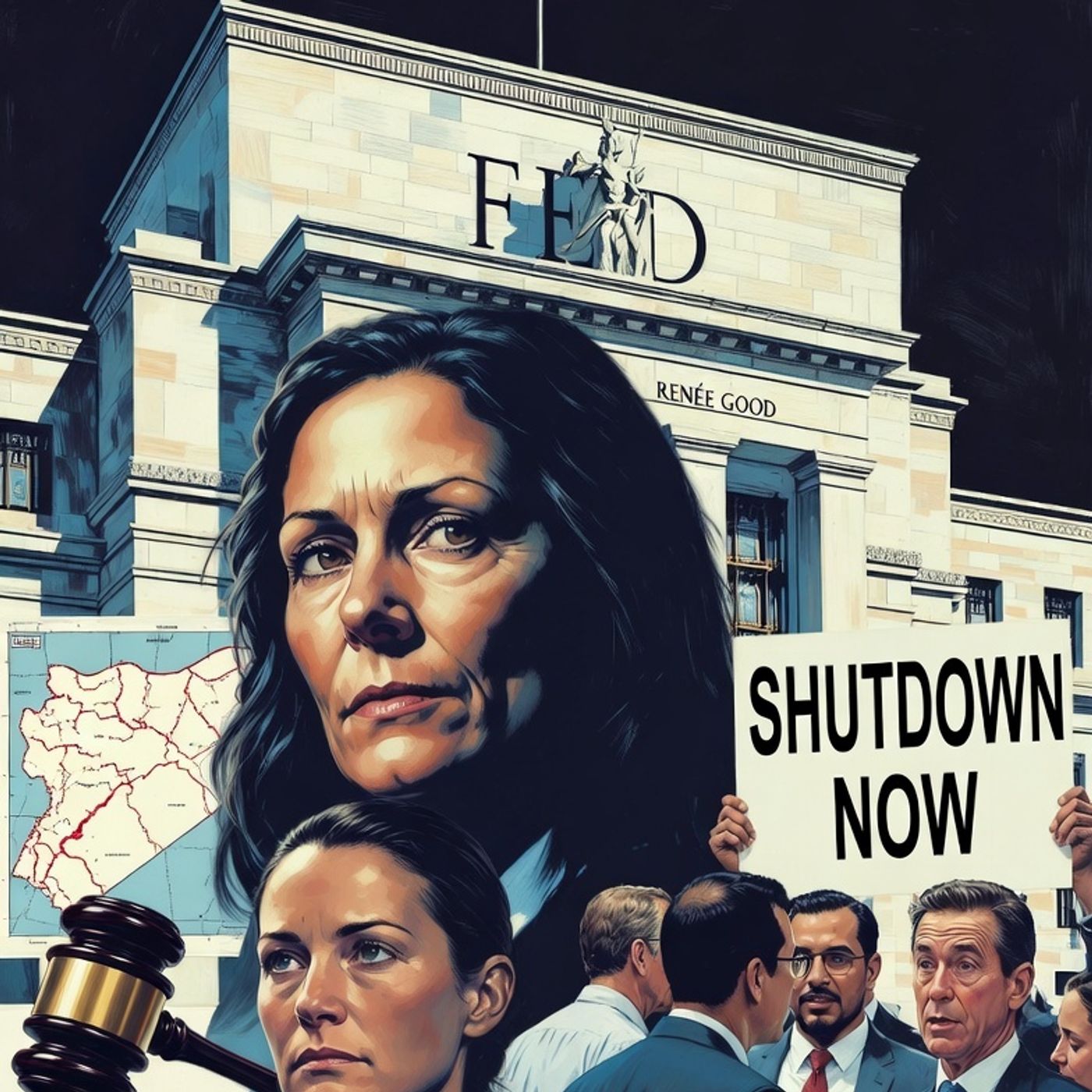
Welcome back to the blog, where we unpack the complex issues we explore in our latest podcast episode. In this week's installment, we’re diving deep into a story that, at its surface, appears to be a single, tragic event, but when examined closely, reveals a much larger and more insidious problem: a profound crisis of trust in our institutions. The Renée Good-ICE shooting in Minneapolis served as a stark and painful illustration of how quickly narratives can form, how difficult it is to ascertain objective truth in highly charged situations, and ultimately, how fractured our collective faith has become. This blog post will delve into the specifics of the Renée Good-ICE shooting incident, analyzing how it served as a catalyst for broader discussions about trust in law enforcement and institutions. We'll explore the human element of the event and the challenges of navigating disputed facts in a charged environment. For a more comprehensive understanding and to hear the full discussion, be sure to check out our related episode: The Trust Crisis: Renée Good, ICE, Syria Strikes, Shutdown Deadline, Tariffs, and the Economy.
Understanding the Renée Good-ICE Incident: Separating Facts from Disputed Claims
The events surrounding the Renée Good-ICE shooting are, unfortunately, a prime example of how swiftly a situation can escalate and how quickly differing accounts can emerge. Renée Good, an individual with ties to ICE (Immigration and Customs Enforcement), was involved in an encounter that resulted in tragedy. Without delving into every granular detail, which can be both sensitive and prone to misinterpretation, the core of the incident revolves around a confrontation that led to a shooting. What followed, as is often the case in high-profile incidents involving law enforcement and sensitive agencies like ICE, was a rapid dissemination of information, often through social media and news cycles, that quickly became polarized.
It’s crucial to acknowledge that in situations like these, immediate reporting is often incomplete, and the early stages can be characterized by speculation and emotion. Official statements are released, eyewitness accounts are gathered, and then the work of investigation begins. However, in our current media landscape, the speed at which information travels often outpaces the ability to verify it. This creates a fertile ground for disputed claims to take root. What one side presents as a clear act of self-defense or necessary force, another might label as excessive or unwarranted. The challenge for the public, and for us as consumers of information, is to sift through these competing narratives and try to arrive at a semblance of objective truth. This isn't to say that truth is elusive, but rather that the process of establishing it is often arduous, and in the immediate aftermath of such an event, it can feel almost impossible to grasp.
The specifics of the Renée Good-ICE incident became a focal point because it touched upon several sensitive and often contentious issues: law enforcement tactics, immigration enforcement, and the potential for individuals to be caught in the crosshairs of complex and sometimes fraught governmental operations. The ambiguity that often surrounds such events, even after initial investigations, highlights a critical gap in public understanding and, more importantly, in public trust. When the facts are contested, and official explanations are met with skepticism, the foundation of trust begins to erode. This incident, therefore, wasn't just about a single shooting; it was about the machinery of information dissemination and the public's ability to process it in an environment already primed for distrust.
The Human Element: Beyond the Headlines and Symbols
It is incredibly easy in the aftermath of events like the Renée Good-ICE shooting to reduce individuals to mere symbols or characters in a pre-ordained narrative. The headlines focus on the dramatic, the tragic, and the controversial. Law enforcement officers become personifications of state power, victims become archetypes of injustice, and the entire incident can be flattened into a easily digestible, yet ultimately inaccurate, representation. However, as we emphasize in our podcast, the reality is far more nuanced and deeply human.
Behind every incident of violence, there are individuals with their own histories, motivations, and experiences. Renée Good was not just a name in a news report; they were a person whose life intersected with law enforcement in a way that ended in tragedy. Similarly, the officers involved were individuals operating under immense pressure, facing potentially dangerous situations, and making split-second decisions. To truly understand the ripple effect of such an event, we must move beyond the black-and-white portrayals and acknowledge the complex emotional landscape that accompanies any use of force, particularly when it results in loss of life.
The human element also extends to the families and communities affected. The grief, the anger, the confusion, and the search for answers are all deeply personal experiences that rarely make it into the mainstream narrative in their full emotional weight. When we fail to acknowledge this human dimension, we lose the opportunity for empathy, for genuine understanding, and for finding common ground. Instead, we often find ourselves entrenched in ideological battles, where the humanity of those involved is sacrificed at the altar of partisan talking points. This dehumanization is a significant contributor to the erosion of trust. When people feel that their experiences, or the experiences of those they identify with, are not being genuinely acknowledged or understood, it breeds resentment and a deep-seated belief that the system is not on their side.
Adrenaline, Confusion, and the 'Narrative Temperature': How Events Unfold
Understanding how events unfold in real-time is crucial to comprehending why so much information becomes contested. In any high-stress situation, particularly one involving law enforcement or a confrontation, the immediate moments are often characterized by adrenaline, confusion, and a profound lack of clarity. For those directly involved, the experience can be a disorienting blur of sensory input, fear, and instinct. For bystanders, the view is often partial, filtered through fear, shock, or a desire to document. And for the investigators and media that arrive later, the scene is already imprinted with the chaos of what has transpired.
This is where the concept of the "narrative temperature" becomes so critical. In a society already simmering with existing tensions, distrust, and pre-existing narratives about law enforcement, immigration, or specific agencies like ICE, any incident, especially one as sensitive as a shooting, is going to ignite and escalate rapidly. The "narrative temperature" refers to the pre-existing emotional and ideological charge that surrounds certain topics. When an event occurs, it doesn't happen in a vacuum; it immediately becomes subject to these existing frameworks of understanding and misunderstanding.
In such an environment, confirmation bias runs rampant. People tend to seek out and interpret information in a way that confirms their pre-existing beliefs. This means that even objective facts can be twisted or perceived through different lenses. An act of force might be immediately framed as justified by those who already trust law enforcement, while others might see it as immediate evidence of systemic oppression. This dynamic creates a feedback loop where conflicting narratives are amplified, and the possibility of a shared understanding diminishes. The Renée Good-ICE shooting, occurring within this charged atmosphere, was inevitably going to become a flashpoint, where the initial confusion and adrenaline of the event were immediately overlaid with the intense "narrative temperature" of our current societal climate.
Connecting the Dots: The Renée Good Incident and Broader Flashpoints
The Renée Good-ICE shooting, while a distinct event, serves as a powerful microcosm of the broader trust crisis plaguing our nation. It's not an isolated incident that stands alone; it's a symptom, a particularly visible one, of a deeper systemic issue. When we step back and look at the landscape of current events, we can see how this erosion of trust manifests across multiple domains, creating a cascade of instability and uncertainty.
Consider the parallels with other major flashpoints that we discuss in our latest episode. The debates around the Syrian strikes and the posture towards ISIS, for instance, are often clouded by differing perceptions of U.S. foreign policy objectives, the effectiveness of military action, and the transparency of governmental decision-making. When trust in official pronouncements is low, public support for complex geopolitical strategies wavers, and uncertainty about the nation's direction grows.
Similarly, the recurring drama of government shutdown deadlines and governing by crisis highlights a fundamental breakdown in trust between political factions and, by extension, between the government and the governed. The inability to engage in good-faith negotiation and compromise signals a deep-seated distrust in the motives and competence of opposing parties, and it leaves citizens feeling that their governance is unstable and unpredictable.
The use of tariffs and emergency powers, and the constant tension with constitutional brakes, further illustrates this point. These are areas where the executive branch often seeks to assert authority, sometimes bypassing traditional legislative processes. In an environment of low trust, such actions are immediately viewed with suspicion, raising concerns about overreach and the erosion of democratic norms. When citizens don't trust that these powers will be used judiciously or for the greater good, it fuels public anxiety and opposition.
And then there's the economy. The increasing price sensitivity and cost pressures felt by everyday Americans mean that economic policy decisions, from interest rates to trade agreements, are scrutinized through a lens of immediate personal impact. When economic anxieties are high, and trust in the institutions managing the economy is weak, even minor fluctuations can be perceived as catastrophic, leading to widespread discontent and a feeling that the system is rigged against the average person. The Renée Good-ICE shooting, in its own way, taps into these same anxieties – the feeling that vulnerable individuals can be caught in the machinery of government, that the system is not always fair, and that official explanations may not always align with lived experiences.
The Deeper Trust Crisis: Losing Faith in Our Systems
The cumulative effect of these disconnected yet interconnected crises is a pervasive and deepening trust crisis. It’s not just about disagreeing on policy; it's about a fundamental loss of faith in the very institutions that are supposed to provide stability, truth, and guidance. When people stop trusting law enforcement to act justly, when they doubt the intentions of their political leaders, when they question the accuracy of information from official sources, and when they feel economically precarious, the social fabric begins to fray.
This loss of faith has tangible consequences. It leads to increased polarization, making constructive dialogue and problem-solving nearly impossible. It fuels cynicism and disengagement, where citizens feel that their participation doesn't matter. It can also lead to radicalization, as individuals seek alternative sources of information and community that may offer simplistic answers or foster extreme viewpoints. The Renée Good-ICE shooting incident, by bringing the complexities of law enforcement and governmental agencies into sharp relief, becomes a stark reminder of this broader breakdown. It’s a moment where the abstract concept of a trust crisis becomes a concrete tragedy, making it impossible to ignore.
When trust erodes, every interaction with an institution becomes fraught with suspicion. Every piece of news is met with skepticism. Every policy decision is viewed through the lens of potential malfeasance. This creates a constant state of anxiety and makes our society more vulnerable to manipulation and division. Rebuilding this trust is not a simple task. It requires a concerted effort from all sectors – government, law enforcement, media, and citizens – to embrace principles of personal responsibility, government restraint, truth, and transparency.
Conclusion: The Path Forward – Responsibility, Transparency, and Clarity
The Renée Good-ICE shooting incident, as we've explored in this post and extensively in our latest podcast episode, The Trust Crisis: Renée Good, ICE, Syria Strikes, Shutdown Deadline, Tariffs, and the Economy, serves as a potent, albeit tragic, illustration of a much larger societal challenge: the erosion of trust in our institutions. It’s a reminder that individual events, when viewed through the lens of our current societal climate, can amplify existing anxieties and expose deep-seated issues of credibility and faith. The human element, the often-confusing nature of real-time events, and the "narrative temperature" all play significant roles in how such incidents are perceived and how they contribute to the broader crisis.
Moving forward requires a commitment to accountability, radical transparency, and a relentless pursuit of clarity. For law enforcement and agencies like ICE, this means not only conducting thorough and impartial investigations but also communicating their findings with an openness that acknowledges the public's right to know and their inherent skepticism. For the media, it means prioritizing accuracy and context over sensationalism, and actively working to counter misinformation. And for us as citizens, it means engaging with information critically, seeking out diverse perspectives, and demanding accountability from our leaders and institutions. The path to rebuilding trust is long and arduous, but by acknowledging the complexity of events like the Renée Good-ICE shooting and connecting them to the broader issues we face, we can begin to lay the groundwork for a more informed, more accountable, and ultimately, more trusting society.

The Economy's Squeeze: Price Sensitivity and Trust in Economic Stability